
Manual Wheelchair Propulsion
You can download the full SUNRISE MEDICAL educational resource in a PDF printable format.
Manual Wheelchair Propulsion — A Simple Guide
Using a manual wheelchair isn’t just about sitting and pushing — how the chair is set up and how you push the wheels makes a big difference in comfort, efficiency, and long-term health. Getting these things right helps you move more easily and can reduce strain or injury to your arms and shoulders.
1. Why Setup Matters
Before you even start pushing, your wheelchair should be set up correctly for your body. A good fit means:
-
You’re positioned so you can reach the wheel easily with your arms.
-
Most of your body weight is over the large rear wheels — this makes it easier to push and steer.
A common guideline is that your middle finger should reach the center of the wheel hub when your arm is relaxed.
2. How Pushing Works
Manual wheelchair propulsion involves a repeating cycle:
-
Push Phase: You place your hand on the wheel’s push-rim and push to move the chair.
-
Recovery Phase: Your hand lets go of the rim and returns to begin the next push.
Like pedaling a bike, the motion is circular — forward to push, then back to get ready for the next stroke.
3. Finding a Good Technique
Even though propelling a wheelchair might seem simple, small changes in technique make a big difference. For example:
-
A smooth push with a longer contact on the wheel rim can be easier on your arms.
-
Fast, short pushes may feel tiring and put more stress on your shoulders.
There isn’t a single “perfect” way to push — people often adapt their style based on the surface they’re moving on (flat ground, uphill, etc.).
4. Taking Care of Your Body
Because manual propulsion uses your arms and shoulders a lot, it’s important to:
-
Sit with good posture.
-
Use smooth, even pushes.
-
Take breaks when needed.
Research shows repetitive pushing can lead to muscle fatigue or shoulder strain over time — so learning good technique and using the right wheelchair setup isn’t just about ease, it’s about protecting your long-term upper-body health.
5. Training and Support
Many people benefit from propulsion training, especially when learning to use a wheelchair or when adjusting to a new chair. This kind of training can improve your technique, help you use less effort, and reduce the risk of injury.
In Short
-
Proper chair setup and pushing technique make wheelchair use easier and safer.
-
Propulsion involves a push phase and a recovery phase — like pedaling a bike.
-
A smooth and efficient push puts less strain on your shoulders and arms.
-
Training and good posture help you stay comfortable and active.
Set Up and Positioning
Before a wheelchair user starts using a manual wheelchair, these key points of rear wheel position should be considered. It is essential for wheelchairs to be set up correctly and for wheelchair users to learn proper propulsion techniques. This makes manual propulsion easy - and minimizes the risk of injury.
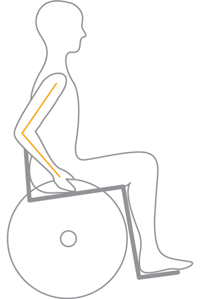
Elbow Angle
Ensuring that when the hand is placed at the center of the handrim, the elbow is at an angle of 100° to 120°. This helps maintain the integrity of the shoulder, elbow, and wrist joints.
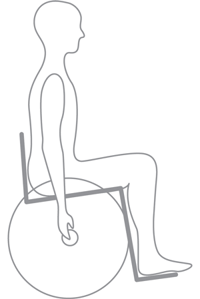
Weight Distribution
Wheelchair users ideally should be seated so that the tip of the middle finger can reach the center of the hub when the upper extremity is in a relaxed position. For most end-users, this will help to ensure that 70-80% of the user's weight is over the rear wheels.
Ensuring that the majority of the person's weight is over the rear wheels ensures the wheelchair is easier to push. If the body weight is too far forward on the casters, pushing is more difficult.
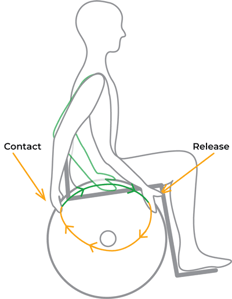
Hand Position on Handrim
Ensuring that the hand makes contact on the handrim near ten o'clock (10:00) on the clock face, releasing near two o'clock (2:00). This maximizes access to the handrim for the duration of the push.
Ideally, the push phase duration = the recovery phase duration
Longer strokes = fewer strokes = less force = less chance of injury
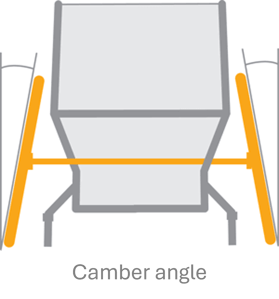
Camber
Don't forget camber! Camber, or the lateral angle of the wheels, increases the ease of the push, as it follows the biomechanics of the shoulder while maximizing lateral stability. By adding camber to the rear wheels, this lateral position increases the ease to push and navigate turns.

Live without limits.
Ultra-lightweight wheelchairs tend to be made of aerospace-grade aluminum or carbon fibre, so they're stronger whilst not compromising the weight of the wheelchair. More durable, ultra-lightweight wheelchairs are tailor-made to your needs and are highly personalizable with a wealth of features and style options. QUICKIE's range of ultra-lightweight wheelchairs also employ a range of unique patented features to further strengthen the frame whilst minimising weight (such as X-Braid Technology on the Krypton).


Making Life Easier ...
At Home Mobility, we provide solutions to every day Mobility problems in and outside home.
Our goal is to improve the quality of life of our Customers. We make sure to give you a solution tailored to your specific needs.
Our products are designed to promote independent lifestyles; They are carefully selected from reputed brands & meet the highest safety standards.
... That's What We Do!